
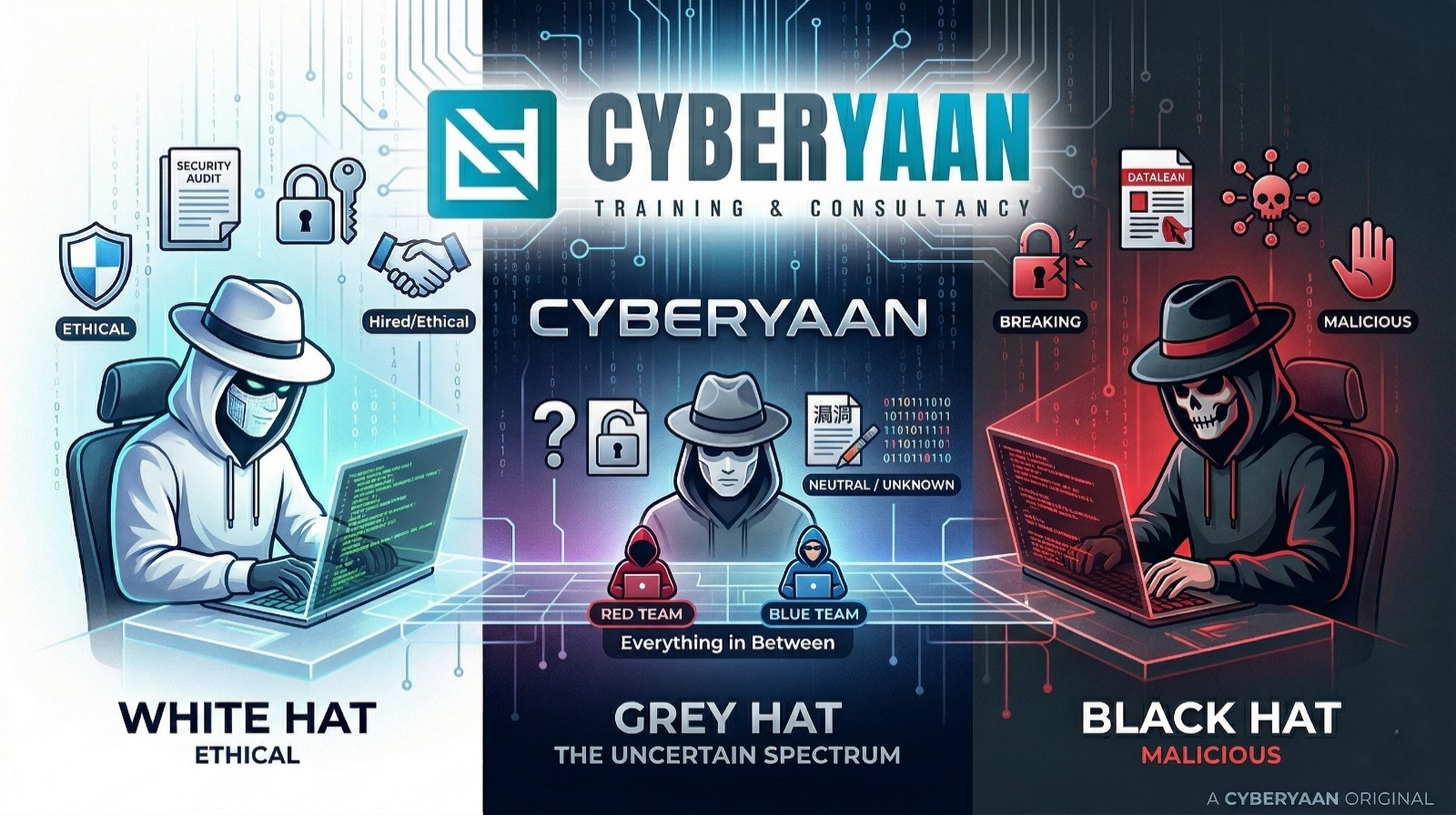
Understanding the different types of hackers is not just trivia. If you’re considering an ethical hacking course in Delhi, understanding where you fit in this landscape and what separates legal, valuable cybersecurity work from criminal activity is foundational knowledge that every aspiring professional needs before they start.
The Original Meaning of “Hacker”
Before the media redefined the word, “hacker” had nothing to do with crime. In the early computing culture of the 1960s and 70s at MIT, a hacker was simply someone who explored the limits of what technology could do someone who pushed systems beyond their intended purpose out of curiosity and creativity. The negative connotation came later, imported from news coverage of early computer crimes in the 1980s and cemented by decades of Hollywood dramatization.
Today the cybersecurity industry has reclaimed and expanded the term, creating a clear taxonomy of hacker types based on intent, authorization, and method. Understanding this taxonomy is the first step toward understanding why an ethical hacking course in Delhi is not just legitimate it is one of the most in-demand career paths in India right now.
White Hat Hackers — The Defenders
White hat hackers are cybersecurity professionals who use their hacking skills legally and ethically with explicit permission from the organizations they test. They are also called ethical hackers or penetration testers, and they are the professionals that companies, banks, government agencies, and tech firms hire to find vulnerabilities before malicious actors do.
A white hat hacker’s job is to think like an attacker to probe networks, web applications, and systems for weaknesses using the same tools and techniques that malicious hackers use and then report those findings so they can be fixed. The key distinction is authorization. Everything a white hat hacker does is sanctioned, documented, and within a defined scope agreed upon with the client.
White hat hacking is the career path that an ethical hacking course in Delhi prepares you for. It is a growing, well-compensated profession with genuine societal value and it is exactly what Cyberyaan’s training programs are designed to produce.
In India, white hat hackers work across multiple sectors. Large IT services companies like HCL, Wipro, and Tech Mahindra maintain internal security teams and hire ethical hackers regularly. Cybersecurity-native firms conduct penetration testing engagements for corporate clients. Banks, fintech companies, and e-commerce platforms hire in-house security professionals. And government agencies including CERT-In and defense contractors employ ethical hackers for national security purposes.
Starting salaries for white hat hackers in Delhi NCR range from ₹3.5 to ₹5.5 LPA at the fresher level, climbing to ₹12 to ₹22 LPA at the senior level and beyond for specialized red team operators and security consultants.
Black Hat Hackers — The Criminals
Black hat hackers are what most people imagine when they hear the word “hacker.” They are individuals who break into systems without authorization for financial gain, personal revenge, political motivation, or simply the challenge of it.

Black hat hacking is illegal. Full stop. Under India’s Information Technology Act 2000 and its subsequent amendments, unauthorized access to computer systems, data theft, and cybercrime carry serious criminal penalties including imprisonment. The romanticized image of the lone hacker outsmarting corporations doesn’t reflect the reality which is that black hat hackers cause billions of rupees in damage annually to Indian businesses, government systems, and individual citizens.
Black hat hackers deploy ransomware against hospitals. They steal credit card data from payment processors. They conduct phishing campaigns targeting government employees. They sell stolen credentials on dark web marketplaces. The damage is real, the victims are real, and the legal consequences for those caught are severe.
It is worth being absolutely clear about this distinction for anyone considering an ethical hacking course in Delhi the skills taught in a legitimate cybersecurity program are identical to the skills used by malicious hackers. The difference is authorization, intent, and legal framework. An ethical hacking course in Delhi teaches you to use offensive techniques legally, ethically, and professionally. It does not provide cover for unauthorized activity.
Grey Hat Hackers — The Complicated Middle
Grey hat hackers occupy an ethically ambiguous space between white and black. They typically hack into systems without authorization but not with malicious intent. The most common grey hat scenario involves someone discovering a vulnerability in a system they had no permission to test, then notifying the organization about the issue rather than exploiting it for personal gain.
On the surface this might seem harmless or even helpful. But from a legal standpoint, unauthorized access is unauthorized access regardless of what you do with what you find. Grey hat hackers expose themselves to legal liability even when their intentions are genuinely good.
The cybersecurity industry’s response to grey hat behavior has largely been the bug bounty program a formalized system where companies explicitly invite security researchers to find vulnerabilities in their systems in exchange for financial rewards and legal protection. Platforms like HackerOne and Bugcrowd have transformed what was once grey hat activity into legitimate, compensated white hat work with clear legal frameworks.
For students completing an ethical hacking course in Delhi, bug bounty programs represent an excellent opportunity to build a portfolio of real-world findings legally, ethically, and potentially profitably while still in training or shortly after completing a program.
Script Kiddies — The Amateurs
Script kiddies are not sophisticated hackers they are individuals who use pre-built hacking tools and exploit code created by others without understanding how those tools work. They don’t develop their own techniques or understand the underlying vulnerabilities they’re exploiting. They simply run scripts and tools created by more skilled hackers.
Script kiddies represent a significant portion of lower-level cybercrime defacing websites, running basic DDoS attacks, and attempting opportunistic intrusions against poorly secured targets. While their technical skill is limited, their potential for damage is not running the right script against a vulnerable target can cause real harm regardless of the operator’s technical sophistication.
This is also why hands-on understanding matters so much in professional cybersecurity training. An ethical hacking course in Delhi worth its fees doesn’t just teach you to run tools it teaches you to understand what those tools are doing at the network and application layer, why certain attacks work against certain configurations, and how to interpret and document findings professionally. That depth of understanding is what separates a qualified ethical hacker from a script kiddie with a Kali Linux installation.
Hacktivists — The Ideologically Motivated
Hacktivists use hacking techniques to advance political, social, or ideological agendas. Groups like Anonymous have become well known for conducting cyberattacks against government websites, corporations, and organizations they oppose defacing websites, leaking sensitive documents, and conducting DDoS attacks to disrupt services.
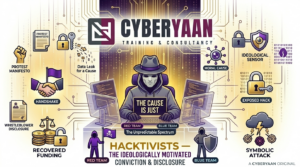
Hacktivism sits firmly in illegal territory regardless of the political motivation behind it. Indian law makes no exception for ideologically motivated cyberattacks unauthorized access to government or corporate systems is a criminal offense whether the attacker believes they are acting in the public interest or not.
From a career perspective, hacktivism is a path that ends in prosecution, not employment. The skills that hacktivists develop are largely the same skills that white hat professionals use but channeled into activity that creates criminal liability rather than career opportunity.
State-Sponsored Hackers — The Nation-State Actors
State-sponsored hackers are among the most sophisticated and well-resourced threat actors in the global cybersecurity landscape. They are employed by governments to conduct cyber espionage, sabotage critical infrastructure, steal intellectual property, and influence geopolitical outcomes through digital means.

India, like every major nation, faces persistent threats from state-sponsored hacking groups. Understanding how nation-state actors operate their techniques, their targets, and their objectives is an important component of advanced cybersecurity training and is relevant to professionals working in defense, critical infrastructure, and government cybersecurity roles.
For students completing an ethical hacking course in Delhi with aspirations toward government or defense sector cybersecurity careers, awareness of nation-state threat actors and advanced persistent threat (APT) techniques is increasingly relevant knowledge.
Red Hat Hackers — The Aggressive Defenders
Red hat hackers are a lesser-known category that sits in an interesting position in the hacker taxonomy. Like white hat hackers, their targets are black hat criminals but unlike white hats who report vulnerabilities and work within legal frameworks, red hat hackers take aggressive, offensive action against malicious actors launching counter-attacks, destroying malware infrastructure, and actively disrupting criminal operations.
Red hat hacking occupies legally grey to black territory in most jurisdictions because it involves unauthorized offensive action even against criminal targets. It is not a recognized professional category in the legitimate cybersecurity industry but it is a useful concept for understanding the full spectrum of hacker motivations and methods.
Blue Hat Hackers — The Revenge Seekers
Blue hat hackers are individuals who hack for personal revenge targeting specific individuals, organizations, or systems that have wronged them personally rather than for financial gain or ideological motivation. Their attacks tend to be personal and targeted rather than broadly criminal.
Blue hat hacking is illegal and the personal motivation behind it provides no legal protection whatsoever.
What This Means for Your Career Decision
Understanding the full taxonomy of hacker types clarifies something important for anyone considering an ethical hacking course in Delhi the skills are identical across the spectrum. What differs is authorization, intent, and legal framework.
The cybersecurity industry has created a legitimate, well-compensated, and genuinely important professional path for people who are drawn to understanding how systems can be broken. That path is white hat hacking and an ethical hacking course in Delhi is the structured, certified route into that profession.
At Cyberyaan, the ethical hacking course in Delhi is built around this professional framework from day one. Students don’t just learn offensive techniques they learn the legal and ethical context in which those techniques are applied, the professional methodology that governs real penetration testing engagements, and the documentation and communication skills that turn raw technical findings into actionable security improvements for real clients.
The difference between a criminal and a cybersecurity professional is not skill. It is authorization, ethics, and professional training.
Conclusion
White hat, black hat, grey hat, script kiddie, hacktivist, state-sponsored, red hat, blue hat the hacker taxonomy is broader and more nuanced than most people realize. What unites all of these categories is the underlying knowledge of how systems work and how they can be compromised. What separates them is everything else intent, authorization, legal framework, and professional context.
If you’re drawn to cybersecurity, to understanding how systems are attacked and defended, and to building a career in one of India’s fastest growing and most in-demand fields — the white hat path through a structured ethical hacking course in Delhi is where that journey legitimately begins.
📞 +91 7428748576 📧 training@cyberyaan.com