Cyber Security Training & Certification Course in Delhi
Cyberyaan Cyber Security Courses in Delhi like Ethical Hacking, Networking CCNA, Python Programming, Kali Linux.
View Course DetailsKickstart Your Cyber Security Course After 12th Class
Cyberyaan's Diploma in cybersecurity after 12th provides hands-on training, certifications and placement support.
View Course Details
One Year Cyber Security Diploma
Course
V3 With AI
Our one-year Diploma equips students with skills in ethical hacking, threat analysis and network defense.
View Course DetailsBook Your Trial Demo Class
Call at +91 7428748576
Networking
/
Kali Linux
/
Python Programming
/
Ethical Hacking
/
Network Penetration Testing
/
Privilege Escalation - Windows
/
Privilege Escalation - Linux
/
Active Directory
/
Web Penetration Testing
/
API Hacking
/
Mobile Penetration Testing
/
SOC
/
ISO 27001 Lead Auditor
/
Courses We Provide
Cyber Security Diploma Course in Delhi
Cyberyaan's Cyber Security Diploma is a complete, job-oriented course that can take you from basics to career-ready in one year. With content that covers ethical hacking, penetration testing, networking, cloud security, and more, this course is the quickest way to a career in cybersecurity in Delhi NCR.



Python Programming
Write scripts, automate tasks, and build real cybersecurity tools from scratch.
Learn More


Network Penetration Testing
Find and exploit vulnerabilities in Android and iOS apps before attackers do.
Learn More

Privilege Escalation - Windows
Find and exploit vulnerabilities in Android and iOS apps before attackers do.
Learn More

Privilege Escalation - Linux
Find and exploit vulnerabilities in Android and iOS apps before attackers do.
Learn More


Web Penetration Testing
Find and exploit vulnerabilities in Android and iOS apps before attackers do.
Learn More


Mobile Penetration Testing
Find and exploit vulnerabilities in Android and iOS apps before attackers do.
Learn More

















Certifications
Recognitions & Certifications
Cyberyaan Training & Consultancy has been recognized by leading organizations for contributing to cybersecurity training, competitions, and technical education initiatives.
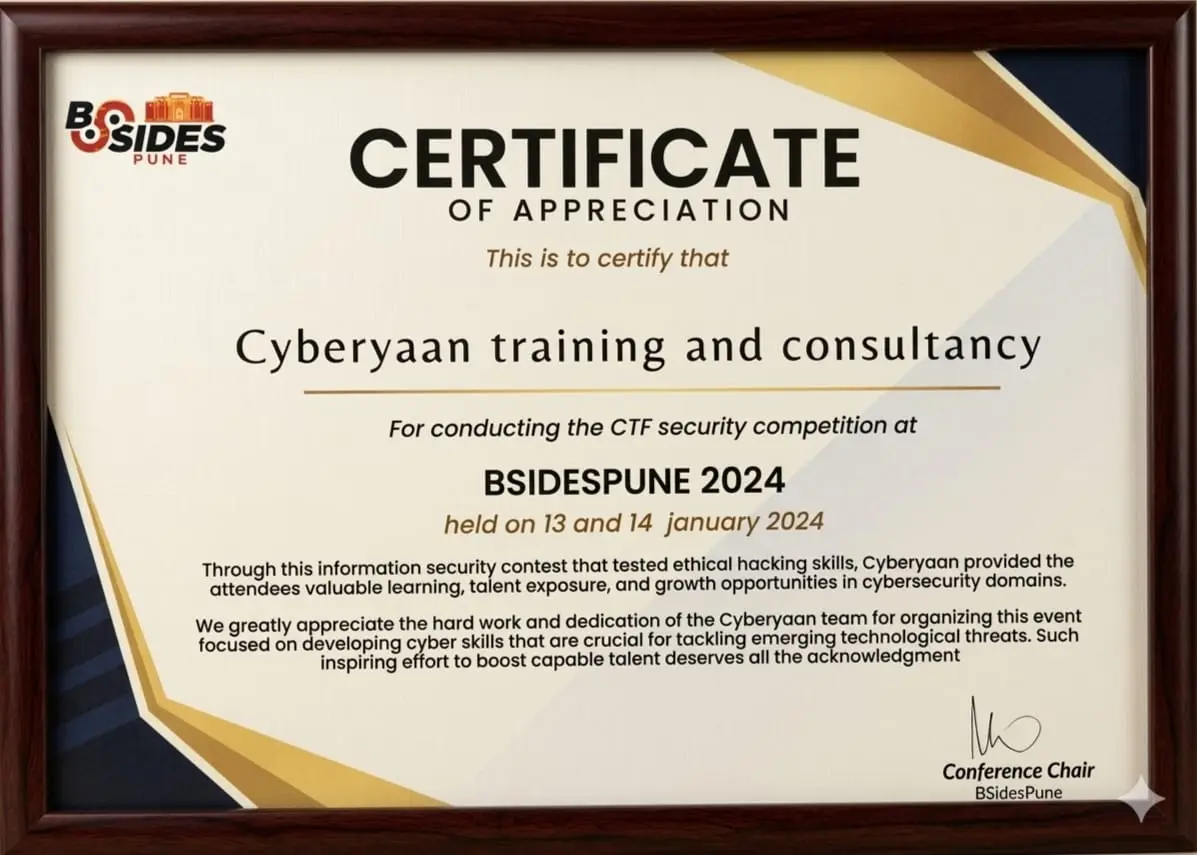
BSides Pune Security Conference
BSides Pune Security Conference
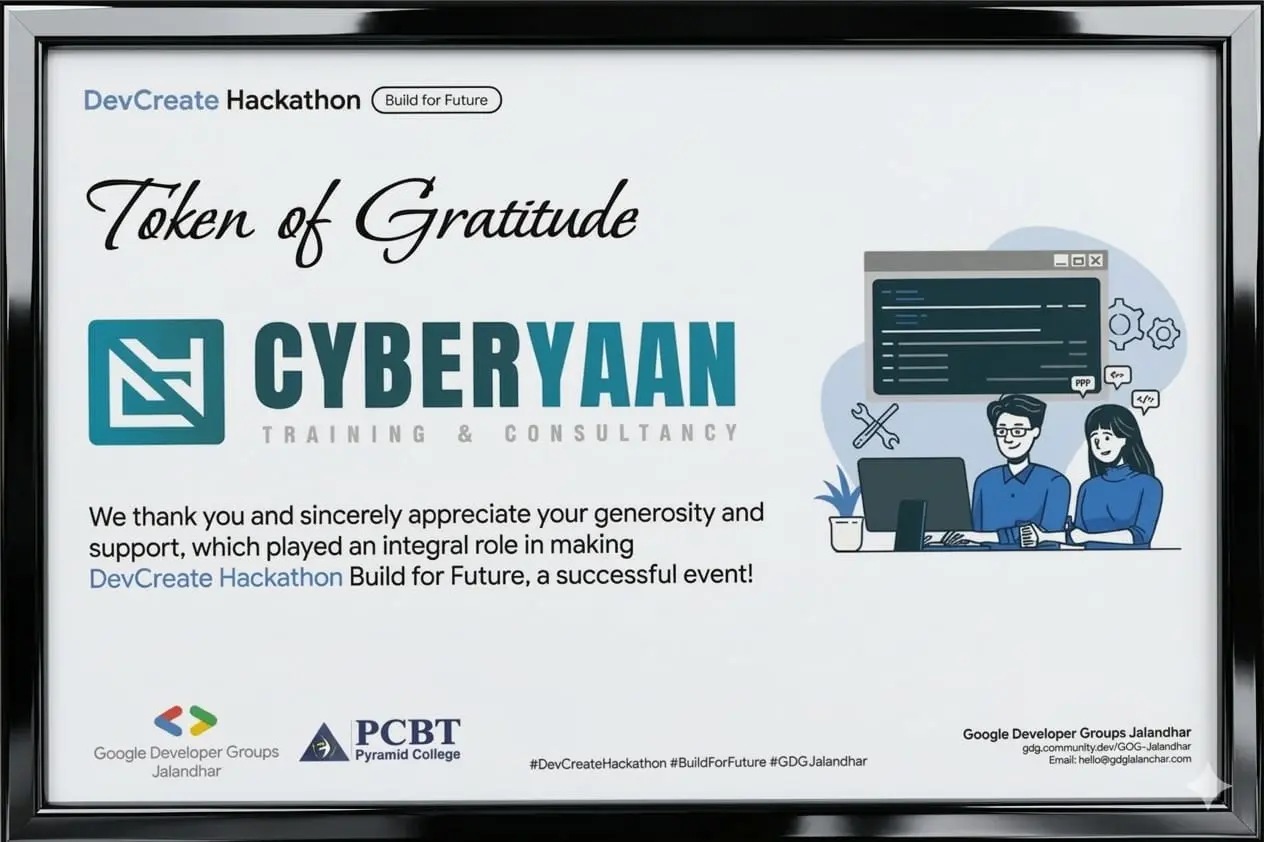
DevCreate Hackathon Appreciation
DevCreate Hackathon Appreciation
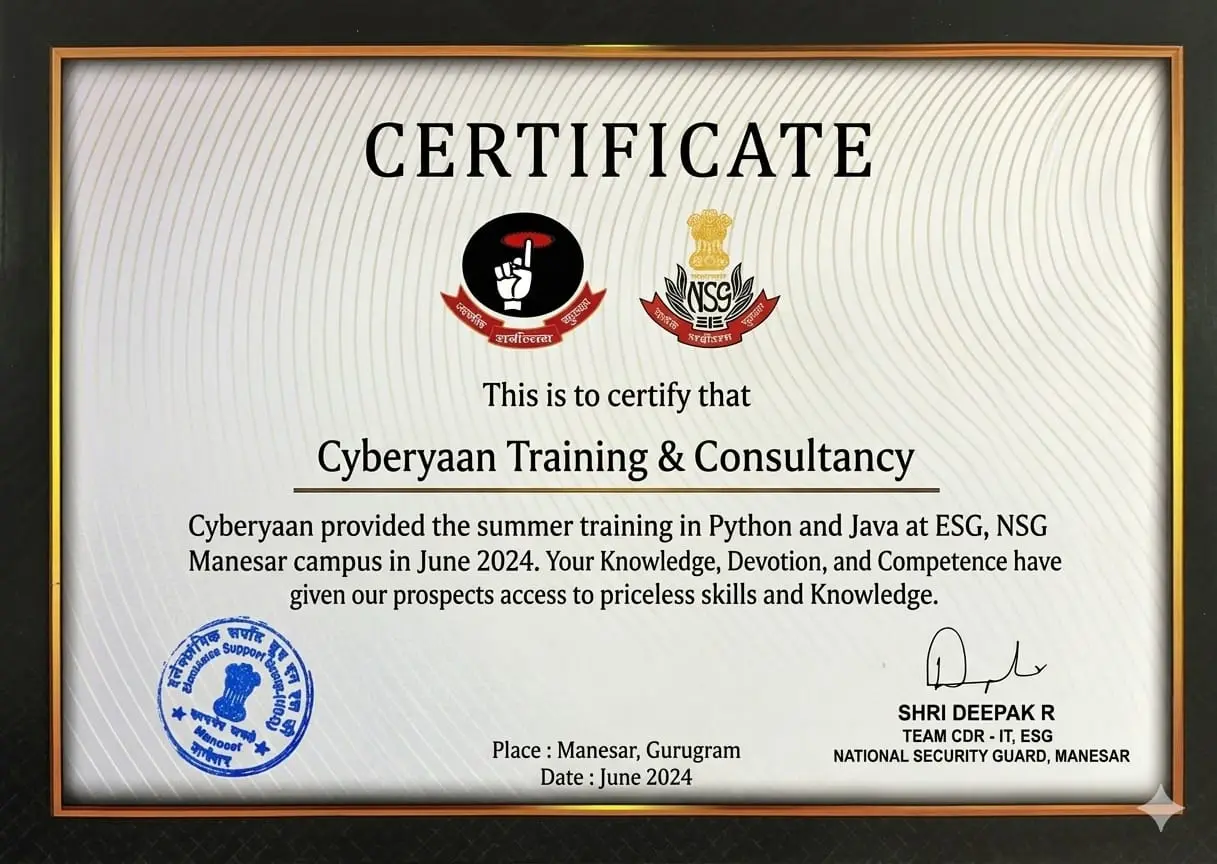
NSG Manesar Training Recognition
NSG Manesar Training Recognition
0+
Students Trained0+
Certifications Issued0+
Courses Available0+
Average Rating
Summer Internship Training
· 2026
Kickstart Your Career:
45-Days Summer Internship Training 2026.
Master any two modules from Ethical Hacking and SOC to Networking and Cloud Security with an exclusive discount. Our intensive 45-day summer program offers hands-on lab experience and expert mentorship to transform your break into a professional launchpad. Enroll now to secure your spot!
Apply for Summer Training
Free consultation · No prior experience required · Flexible online & offline batches
Summer Internship Training 2026
✦
Limited Seats — Enroll Now
✦
Batch Starts June 2, 2026
✦
Ethical Hacking & Cyber Security
✦
🎓 Certificate Included
✦
Live Projects & Industry Mentors
✦
Exclusive Discount
✦
Online & Offline Available
✦
Summer Internship Training 2026
✦
Limited Seats — Enroll Now
✦
Batch Starts June 2, 2026
✦
Ethical Hacking & Cyber Security
✦
🎓 Certificate Included
✦
Live Projects & Industry Mentors
✦
Exclusive Discount
✦
Online & Offline Available
✦
Upcoming Batches
Your Next Batch Starts Soon
Whether you prefer weekdays, weekends, or fast track — a new batch is starting soon.
| # | Course Name | Start Date | Time | Duration | Mode | Action |
|---|---|---|---|---|---|---|
| 01 | Ethical Hacking & Penetration Testing | 27 Mar 2026 | 5:00 - 6:30 PM | 45 Days | Online + Offline | Book Now |
| 02 | Linux for Cybersecurity | 01 Apr 2026 | 12:00 - 2:00 PM | 30 Days | Online + Offline | Book Now |
| 03 | Networking Essentials | 01 Apr 2026 | 10:00 AM - 12:00 PM | 30 Days | Online + Offline | Book Now |
| 04 | SOC Analyst Training | 07 Apr 2026 | 5:00 - 6:30 PM | 45 Days | Online + Offline | Book Now |
| 05 | Networking Essentials | 10 Apr 2026 | 12:00 - 2:00 PM | 30 Days | Online + Offline | Book Now |
| 06 | Networking Essentials | 14 Apr 2026 | 10:00 AM - 12:00 PM | 30 Days | Online + Offline | Book Now |
| 07 | Network Penetration Testing | 20 Apr 2026 | 12:00 - 2:00 PM | 45 Days | Online + Offline | Book Now |
| 08 | Ethical Hacking / WPT | 23 Apr 2026 | 3:00 - 5:00 PM | 45 Days | Online + Offline | Book Now |
| 09 | Web Penetration Testing | 30 Apr 2026 | 10:00 AM - 12:00 PM | 45 Days | Online + Offline | Book Now |
Placements & Internship
Our Placed Students
Our students are placed in top cybersecurity companies through our training and internship programs.

Ravinshu Chauhan
Soc Analyst
InnsparkThis achievement reflects hard work,
dedication, and consistent efforts

Pranav
Security Analyst Trainee
Cynox SecurityHe didn't wait for opportunity
He built the skills to create it.

Prince Bhardwaj
Cyber Security Analyst
AccentureSkills don't build themselves.
He did the work.

Debjit Mohapatra
Cyber Security Trainer
GL BajajThe grind was real.
So is the job offer.

Ravi
Soc Analyst
HAYS (INTERNATIONAL PLACEMENT)Doubted by many.
Hired by the best.

Suraj Ashok Rathore
Security Analyst Trainee
Cynox SecuritySame city, same dreams, different grind.
This is what dedication looks like.

Arpit Hawa
Cisco Tac engineer
CapgeminiOne course changed everything.
One decision made it happen.

Pratik
Security analyst
Indian ArmyThey came with a dream.
They left with a career

Aditi goyal
Cisco Tac engineer
CapgeminiNot the easiest path.
Absolutely the right one.

Hansika Rawat
Cyber Security Analyst
Cynox SecurityFrom student to professional
one lab session at a time.

Chandan Jha
Cybersecurity Consultant
HCL TECHEvery late night, every lab session,
every challenge — worth it.

Isha
Security Analyst
CywardonHard work has a syllabus.
She mastered every module.

Dinesh Kumar
Cyber Security Analyst
InfosysThe certificate was just the proof.
The work was always the point.

Harsh Vardhan Verma
Soc Analyst
CISAIHe came to learn. he left ready to lead.

Harsh Verma
Technical Support Implementation Engineer
HoloocomCuriosity got him started.
Dedication got him hired.

Yash Garg
Cyber security analyst
Cynox Security LLPHe showed up every day.
The placement showed up for him.

Ajay Sharma
Cyber security analyst
Codec networksNot the easiest path
. Absolutely the right one.

Mohit Yadav
National informatics Center
Meityrom first lab to first salary
this is his story.

Rohit
SOC Analyst
KPMGThe classroom was just the beginning.
The career is the proof

Kirti
CyberSecurity Analyst
CynoxShe didn't just learn cybersecurity
she became it.
Harsh Vardhan Verma
Soc Analyst
CISAIHe came to learn. he left ready to lead.
Harsh Verma
Technical Support Implementation Engineer
HoloocomCuriosity got him started.
Dedication got him hired.

Janvi
SOC Analyst
CynoxSkills don't build themselves.
They did the work

Aksh Yadav
SOC Analyst
Skillminerained right. Placed fast.
Future secured.

Divyanshu Shekhar
Information Security Officer
TransbankHis story started here.
His career started there.

Gyan Ranjan
Cyber Security Analyst
CynoxNo Luck, No Fluke and No Referrals
just pure grind.

Rahul Chaturvedi
SOC Analyst
Innsparkrom first lab to first salary
this is his story.

Shivam
SOC Analyst
InnsparkCuriosity got him started.
Dedication got him hired.

Ekas Nayyar
Information Security Intern
Cyberalpha Consulting LLPThe certificate was just the proof.
The work was always the point.

Vansh Gupta
Cyber Security Analyst
Infocus-ITOne course changed everything.
One decision made it happen.

Ishwinder
Cyber Security Analyst
Infocus-ITThe grind was real.
So is the job offer.
Ravinshu Chauhan
Soc Analyst
InnsparkThis achievement reflects hard work,
dedication, and consistent efforts
Pranav
Security Analyst Trainee
Cynox SecurityHe didn't wait for opportunity
He built the skills to create it.
Prince Bhardwaj
Cyber Security Analyst
AccentureSkills don't build themselves.
He did the work.
Debjit Mohapatra
Cyber Security Trainer
GL BajajThe grind was real.
So is the job offer.
Ravi
Soc Analyst
HAYS (INTERNATIONAL PLACEMENT)Doubted by many.
Hired by the best.
Suraj Ashok Rathore
Security Analyst Trainee
Cynox SecuritySame city, same dreams, different grind.
This is what dedication looks like.
Arpit Hawa
Cisco Tac engineer
CapgeminiOne course changed everything.
One decision made it happen.
Pratik
Security analyst
Indian ArmyThey came with a dream.
They left with a career
Aditi goyal
Cisco Tac engineer
CapgeminiNot the easiest path.
Absolutely the right one.
Hansika Rawat
Cyber Security Analyst
Cynox SecurityFrom student to professional
one lab session at a time.
Chandan Jha
Cybersecurity Consultant
HCL TECHEvery late night, every lab session,
every challenge — worth it.
Isha
Security Analyst
CywardonHard work has a syllabus.
She mastered every module.
Dinesh Kumar
Cyber Security Analyst
InfosysThe certificate was just the proof.
The work was always the point.
Harsh Vardhan Verma
Soc Analyst
CISAIHe came to learn. he left ready to lead.
Harsh Verma
Technical Support Implementation Engineer
HoloocomCuriosity got him started.
Dedication got him hired.
Yash Garg
Cyber security analyst
Cynox Security LLPHe showed up every day.
The placement showed up for him.
Ajay Sharma
Cyber security analyst
Codec networksNot the easiest path
. Absolutely the right one.
Mohit Yadav
National informatics Center
Meityrom first lab to first salary
this is his story.
Rohit
SOC Analyst
KPMGThe classroom was just the beginning.
The career is the proof
Kirti
CyberSecurity Analyst
CynoxShe didn't just learn cybersecurity
she became it.
Harsh Vardhan Verma
Soc Analyst
CISAIHe came to learn. he left ready to lead.
Harsh Verma
Technical Support Implementation Engineer
HoloocomCuriosity got him started.
Dedication got him hired.
Janvi
SOC Analyst
CynoxSkills don't build themselves.
They did the work
Aksh Yadav
SOC Analyst
Skillminerained right. Placed fast.
Future secured.
Divyanshu Shekhar
Information Security Officer
TransbankHis story started here.
His career started there.
Gyan Ranjan
Cyber Security Analyst
CynoxNo luck, No Fluke and No referrals
just pure grind.
Rahul Chaturvedi
SOC Analyst
Innsparkrom first lab to first salary
this is his story.
Shivam
SOC Analyst
InnsparkCuriosity got him started.
Dedication got him hired.
Ekas Nayyar
Information Security Intern
Cyberalpha Consulting LLPThe certificate was just the proof.
The work was always the point.
Vansh Gupta
Cyber Security Analyst
Infocus-ITOne course changed everything.
One decision made it happen.
Ishwinder
Cyber Security Analyst
Infocus-ITThe grind was real.
So is the job offer.
Our Top Placements
Prince Bhardwaj
Cyber Security Analyst
AccentureSkills don't build themselves.
He did the work.
Debjit Mohapatra
Cyber Security Trainer
GL BajajThe grind was real.
So is the job offer.
Ravi
Soc Analyst
HAYS (INTERNATIONAL PLACEMENT)Doubted by many.
Hired by the best.
Arpit Hawa
Cisco Tac engineer
CapgeminiOne course changed everything.
One decision made it happen.
Pratik
Security analyst
Indian ArmyThey came with a dream.
They left with a career
Aditi goyal
Cisco Tac engineer
CapgeminiNot the easiest path.
Absolutely the right one.
Rohit
SOC Analyst
KPMGThe classroom was just the beginning.
The career is the proof

Gaurav Pathak
IT Security Engineer
Ministry of DefenceThey invested in themselves.
The industry invested back.
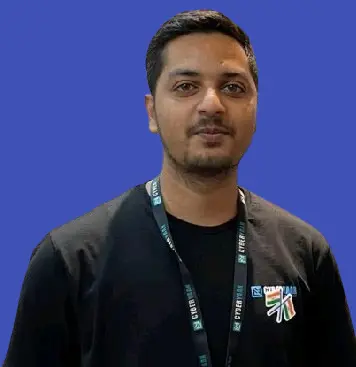
Tushal Kumar
Security Analyst
Cyberion LabsOne course changed everything.
One decision made it happen.

Ritik Chaudhary
Security Analyst
SBIFrom first lab to first salary
this is his story.
Dinesh Kumar
Cyber Security Analyst
InfosysEvery late night, every lab session,
every challenge — worth it.
Chandan Jha
Cybersecurity Consultant
HCL TechThe certificate was just the proof.
The work was always the point.
Mohit Yadav
National informatics Center
Meityrom first lab to first salary
this is his story.
Prince Bhardwaj
Cyber Security Analyst
AccentureSkills don't build themselves.
He did the work.
Debjit Mohapatra
Cyber Security Trainer
GL BajajThe grind was real.
So is the job offer.
Ravi
Soc Analyst
HAYS (INTERNATIONAL PLACEMENT)Doubted by many.
Hired by the best.
Arpit Hawa
Cisco Tac engineer
CapgeminiOne course changed everything.
One decision made it happen.
Pratik
Security analyst
Indian ArmyThey came with a dream.
They left with a career
Aditi goyal
Cisco Tac engineer
CapgeminiNot the easiest path.
Absolutely the right one.
Rohit
SOC Analyst
KPMGThe classroom was just the beginning.
The career is the proof
Gaurav Pathak
IT Security Engineer
Ministry of DefenceThey invested in themselves.
The industry invested back.
Tushal Kumar
Security Analyst
Cyberion LabsOne course changed everything.
One decision made it happen.
Ritik Chaudhary
Security Analyst
SBIFrom first lab to first salary
this is his story.
Dinesh Kumar
Cyber Security Analyst
InfosysEvery late night, every lab session,
every challenge — worth it.
Chandan Jha
Cybersecurity Consultant
HCL TechThe certificate was just the proof.
The work was always the point.
Mohit Yadav
National informatics Center
Meityrom first lab to first salary
this is his story.
Testimonials
Straight From Our Students
Don't take our word for it — hear directly from the students whose lives changed after joining Cyberyaan.
Devansh Rao

I had a great experience learning Python at Cyberyaan. The environment is very positive and motivating. Special thanks to Sujal Sir for his excellent teaching style and guidance. He made complex concepts easy to understand. I highly recommend Cyberyaan to anyone who wants to learn python programming in the best way!
Ishant Bhardwaj
I am currently enrolled in 1 year cyber security Diploma Course. Pleasant experience so far. Teachers are very helpful especially Gaurav Pathak sir and Sujal Sir. They have explained the concepts clearly and thoroughly. The teachers are highly experience and helpful and they have made the learning experience very great
Yash Garg
"Recently Gaurav sir have teached me linux and networking in very easy pattern and I am slow learner but gaurav sir help me in all situation, gaurav sir is very supporting teacher. I recommend you to take class from gaurav sir. And cyberyaan atmosphere is very good. And teacher are very supportive and talented."
manmeet kaur
"Gaurav sir is an great trainer his teaching. style is easy to understand and explains complex concepts in a very simple way his class sessions are always informative and sir's training is very interactive i enjoy his classes grateful to have(" Gaurav sir)" as my trainer!!+â€
Karan Khanna
Cyberyaan is the best institute in Delhi for cybersecurity and ethical hacking and many more. Huge thanks to Aayush Sir for amazing teaching and to Pankaj Sir for always supporting. Everything here is top-notch -highly recommended!
Ekas Nayyar
"Very satisfied with the experience here, being taught by Gaurav sir currently, he is very good at explaining concepts and a great guide for me. Puts efforts in his teachings and will never fail to keep you engaged in the class."
Meenu Maurya
One of the best cyber security training company. All Trainers are very knowledgeable. Highly recommend. Special thanks to my counsellor Manisha mam and My trainer Gaurav sir.
Aryan Sharma
Great Support and Guidance by Tushal Sir. Cyberyaan gives best support to thier students.
prasenjit dutta
In 2023 I completed training of malware analysis and now I have completed CEh v 13 and got certified Ž‰and I must say, it was a very rewarding experience. The instructors were highly knowledgeable.
Komal
I had an excellent experience with in cyberyaan . From start to finish,the service was outstanding. The team was professional, knowledgeable, and always available to answer my question.
Vicky Kumar
Cyberyaan is an excellent platform for learning cybersecurity and related technologies. The training is well-structured, practical, and easy to understand, even for beginners. The mentors are knowledgeable, supportive, and always willing to clear doubts, which makes the learning experience very effective.
Sumit Lohan
Excellent training institute for cybersecurity and ethical hacking. CyberYaan focuses more on skills rather than just theory, which really helps in understanding real-world security challenges. The learning environment is professional and motivating.
Dusmanta Sahoo
The Cybersecurity and Ethical Hacking training at Cyberyaan was highly informative and engaging. The trainers were knowledgeable, and the hands-on sessions provided practical experience. I feel much more confident in my skills after completing the course!"
Priyanka Rai
Cyberyaan has good potential — the teaching staff is supportive and I liked the hands-on labs. However, some sessions felt rushed and a few topics weren’t covered in enough detail for real-world readiness. If you join, treat the course as a starting point — plan extra self-study or practical projects to get full value
yash prajapati
Great experience with Cyberyaan's CEH v13 training! The course content is updated, hands-on, and very beginner-friendly. Their support team and instructors are very responsive and helpful throughout the learning journey.
Priya Singh
I joined Cyberyaan's Ethical Hacking course recently. The instructors were very helpful, explained technical concepts clearly, and the lab‑based sessions gave real hands‑on exposure. The learning environment was supportive and doubts were cleared quickly. Overall, a good place to start if you are new to cybersecurity.
Sameer Meher
I would like to express my gratitude to Cyberyaan for their exceptional support and guidance. Their structured training, constant encouragement, and expert mentorship played a key role in my successful certification journey. Truly a reliable partner in achieving career goals. ✨
Sumit Pahadi
Best place for all it needs the owner is so polite and humble service is also nice very much satisfied with the work
Sarthi Joshi
Cyberyaan is a training institute focused on cybersecurity and ethical hacking courses with hands‑on practical instruction, industry‑aligned curriculum, and placement support
Honey Saini
As a student at Cyberyaan, I've had a great learning experience. The trainers are supportive, the teaching is practical, and the environment is motivating. Highly recommended for anyone serious about cybersecurity
Shallu Yadav
Best experience with cyberyaan, gives such useful tips to secure from basic cyber threats to school students. Special thanks to Pankaj Sir for providing this session.
Nisha Sharama
CyberYaan helped me transform my interest in cybersecurity into a career path. The mentors provide personal attention, the labs are excellent, and they also keep us updated with the latest cyber news.
Uday Gupta
The best part about CyberYaan is their practical learning approach. We worked on real cybersecurity tools, SOC concepts, and even Capture the Flag challenges. This gave me an edge in my placements.
Mohit Yadav
Had a really good learning experience here. The mentors are knowledgeable and explain everything clearly. Definitely recommend their courses to anyone who wants solid, practical training.
Nitin Kumar
Great institute for learning CCNA concepts with practical labs, supportive trainers, clear explanations, and good guidance for networking career growth.
Ishu Garg
It was an excellent session & pure knowledge transfer. Very easy to understand & the video provided after the training is very helpful. Completely based on practical knowledge which makes it easy to understand.Thanks Sir for your support & training.
Gaurav Yadav
I had a great experience learning Python at Cyberyaan. The environment is very positive and motivating. Sujal Sir is an excellent teacher—very supportive and explains every concept clearly. The hands-on practice and real-world examples helped me a lot. Highly recommend Cyberyaan for anyone looking to learn coding!
Naman Tiwari
Cyberyaan stands out as a leading institute for those aspiring to build a career in cybersecurity. Its blend of expert instruction, comprehensive curriculum, and practical training makes it a top choice for students in Delhi and beyond.I will highly recommend you to join Cyberyaan for betterment future
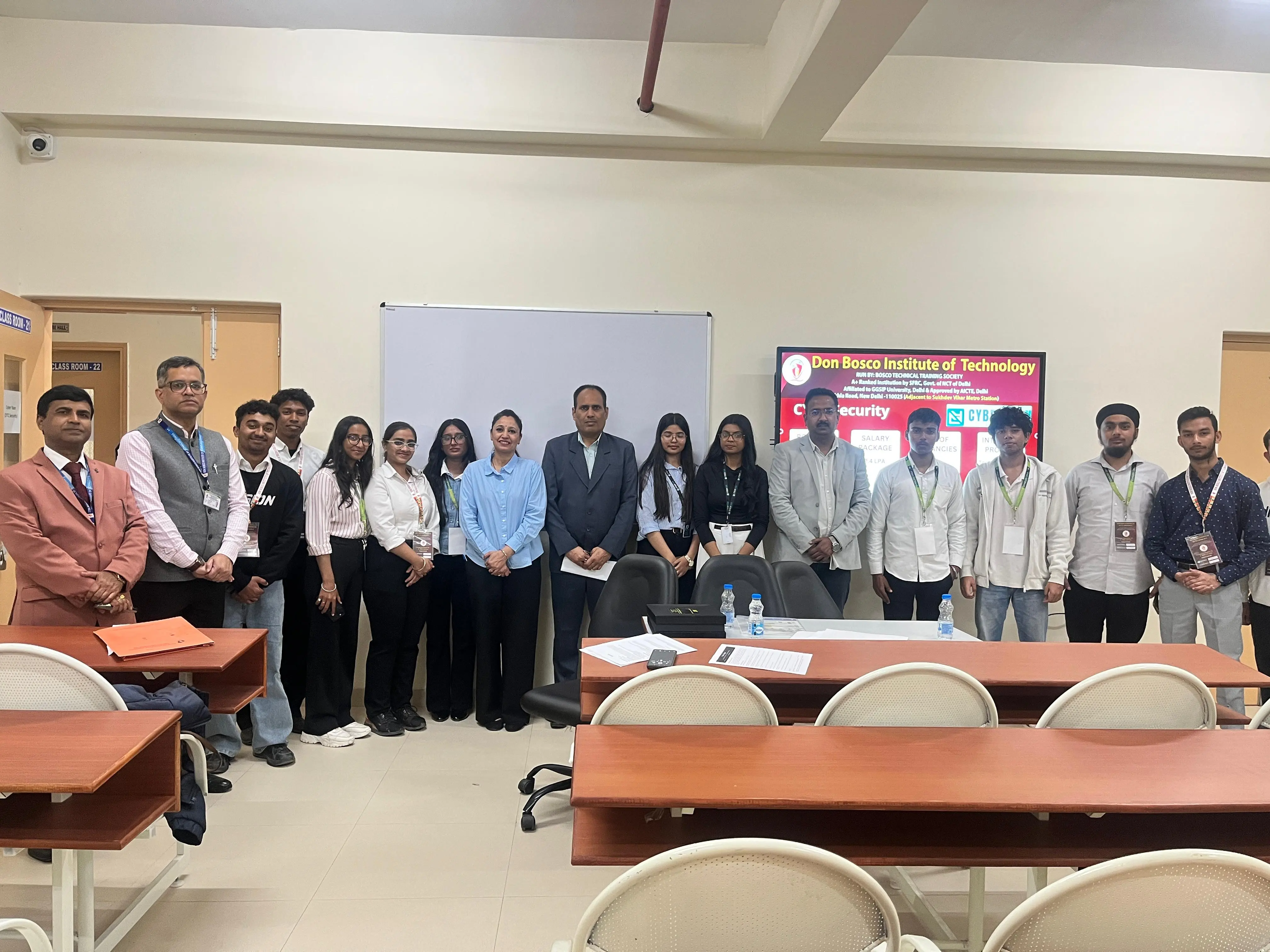
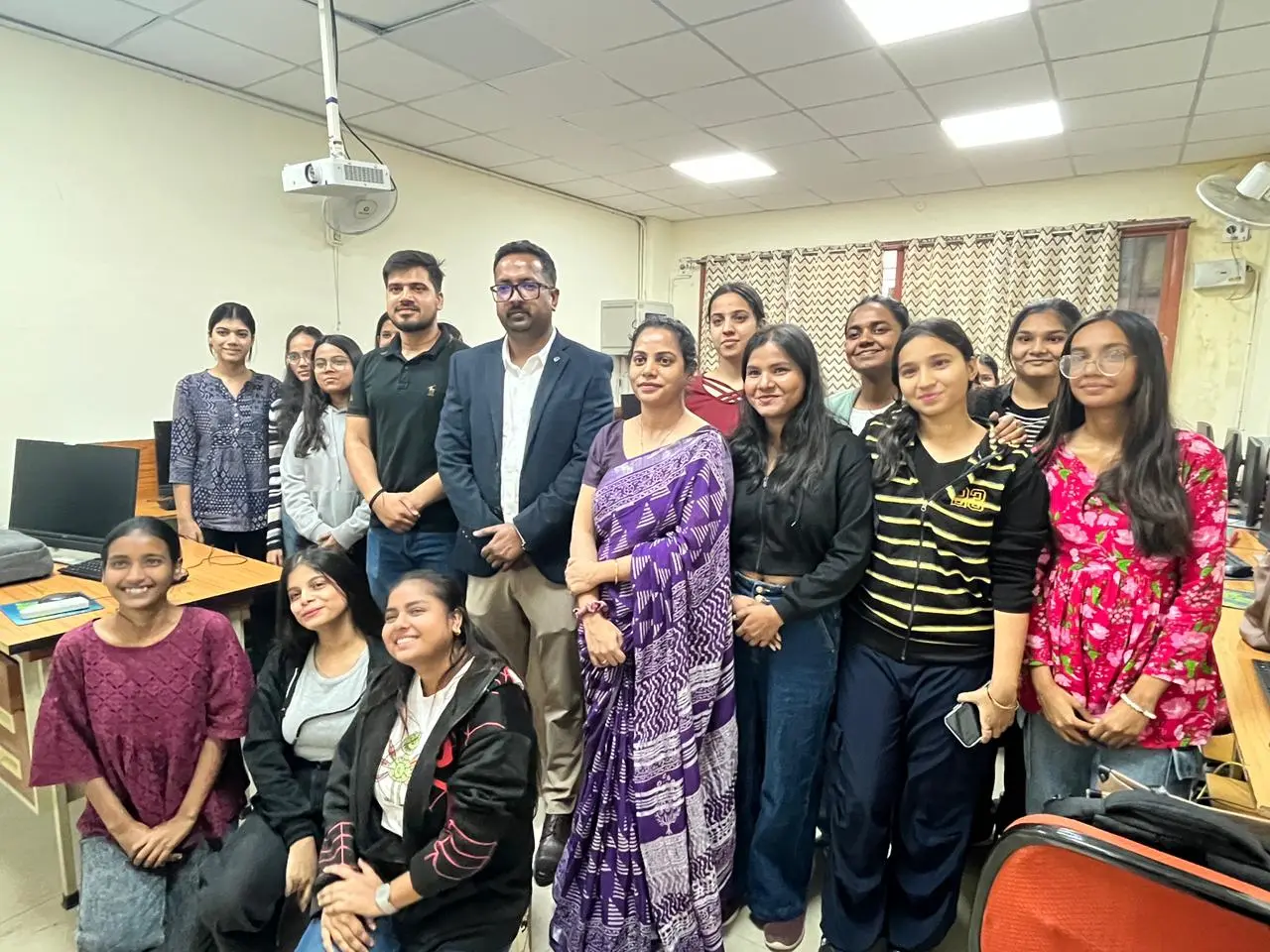
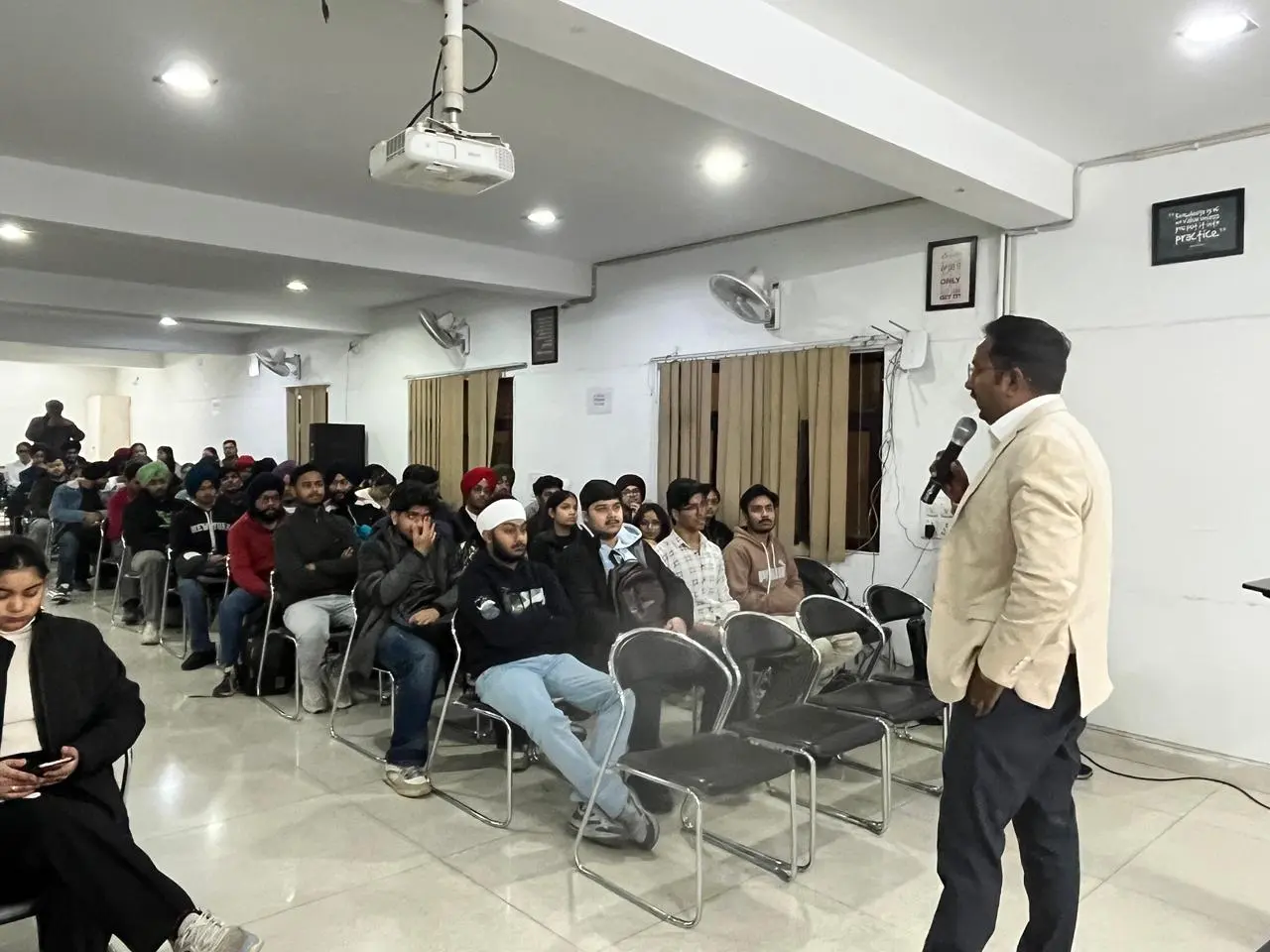
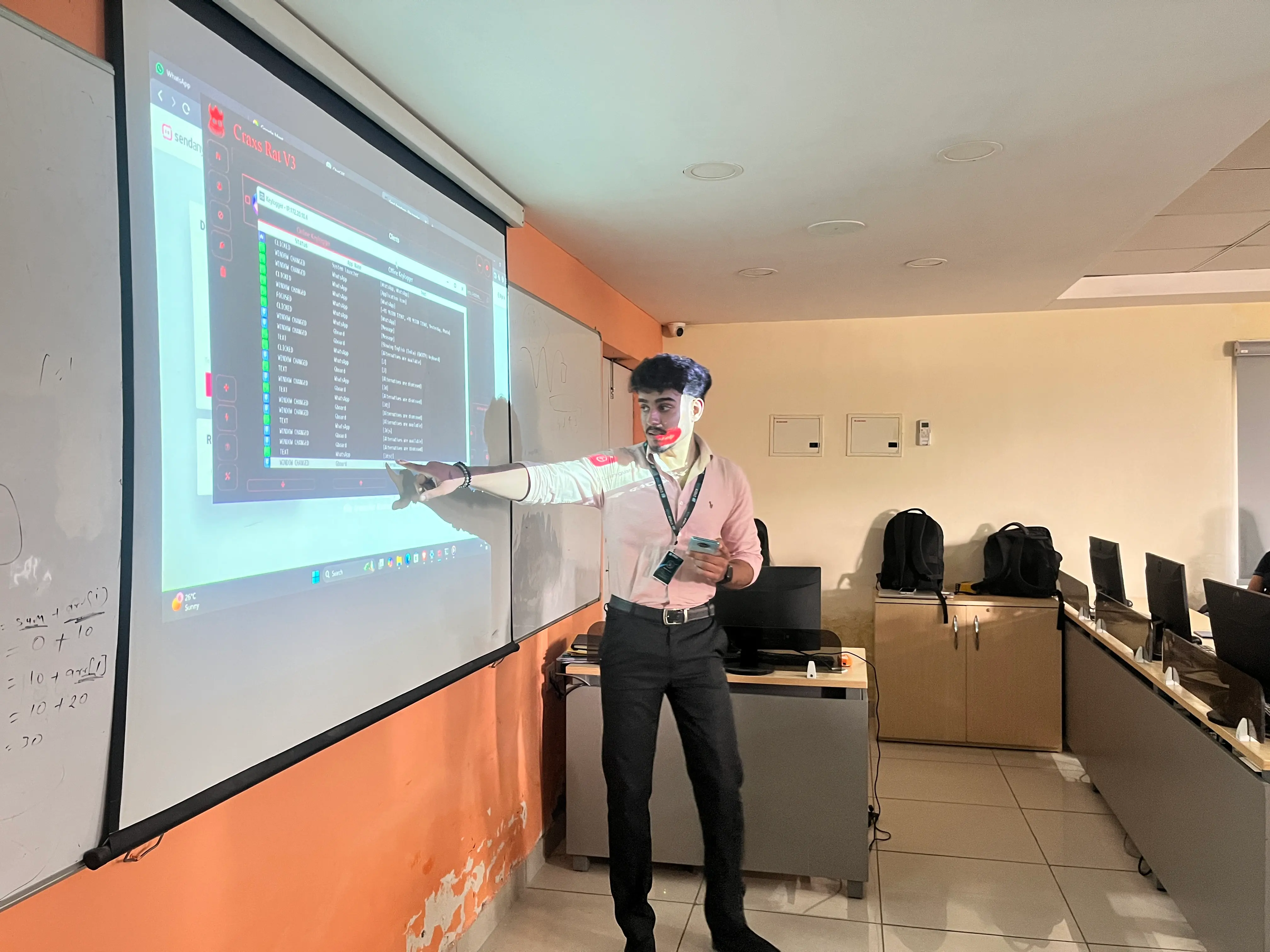
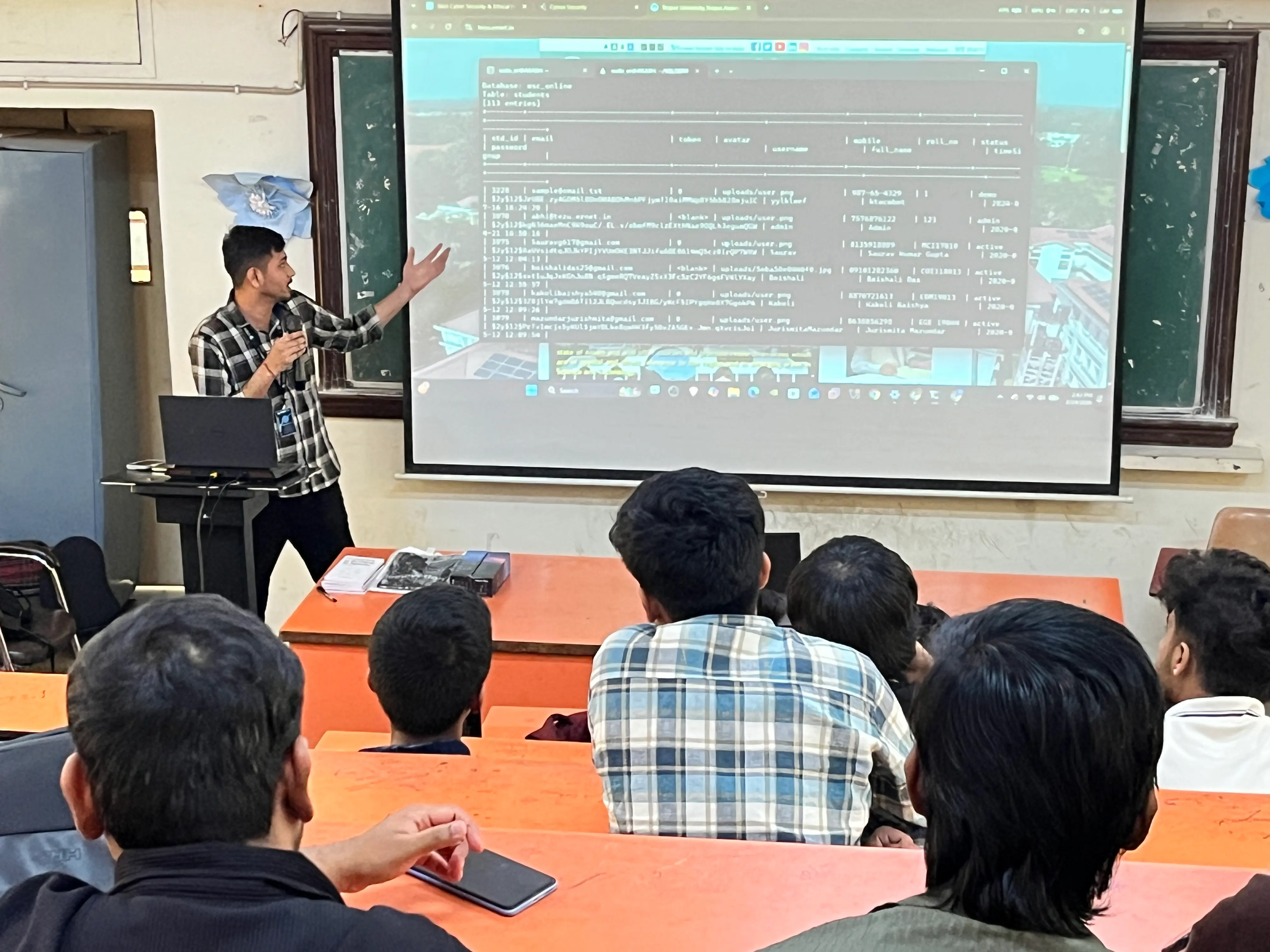
Gallery
Moments That Define Us
Real Classrooms. Real Labs. Real Achievements. Take a look inside Cyberyaan.

Latest Blogs
Insights from the Cyberyaan Blog
Real insights. Real guidance. Written by cybersecurity professionals for the next generation of ethical hackers.
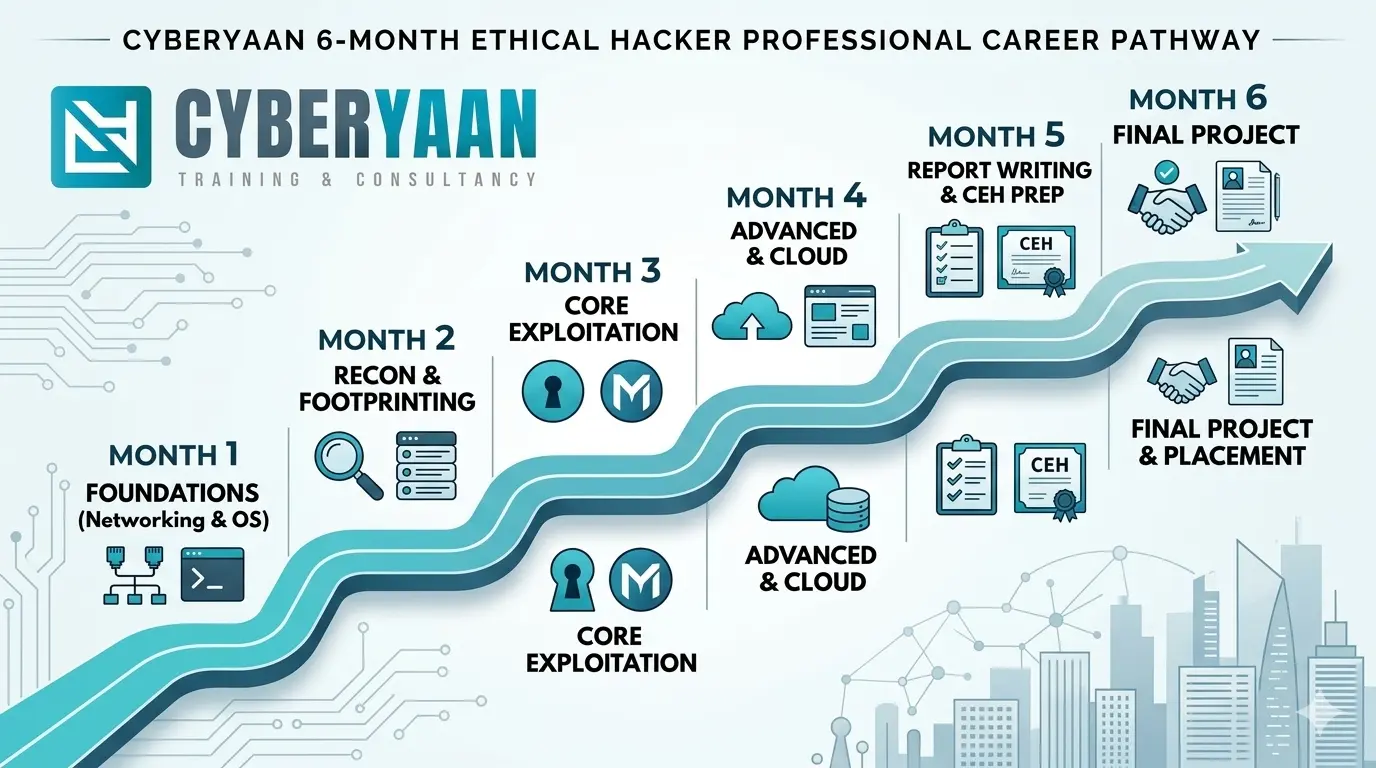
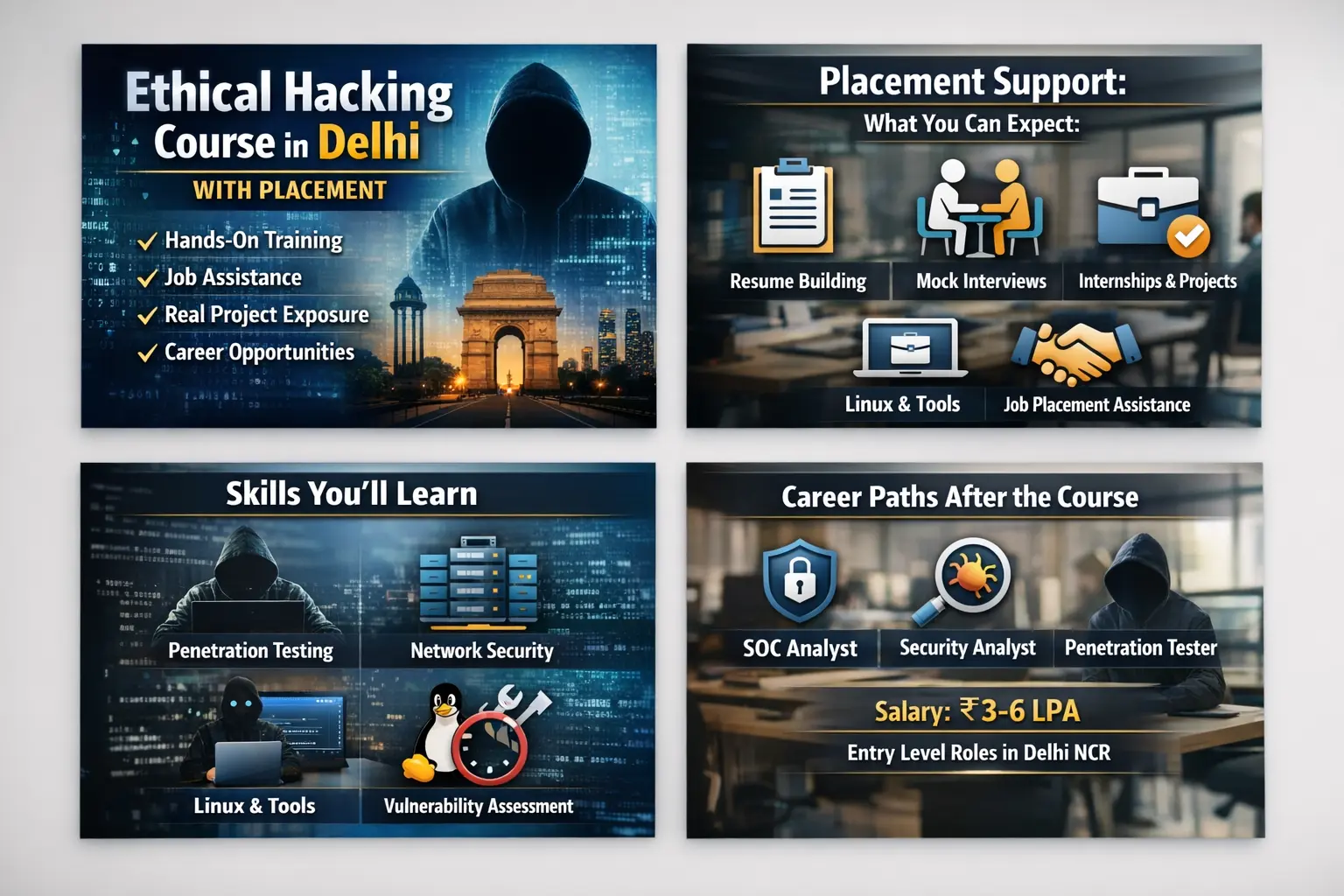
Ethical Hacking Course in Delhi with Placement - Complete Roadmap In 2026
Read More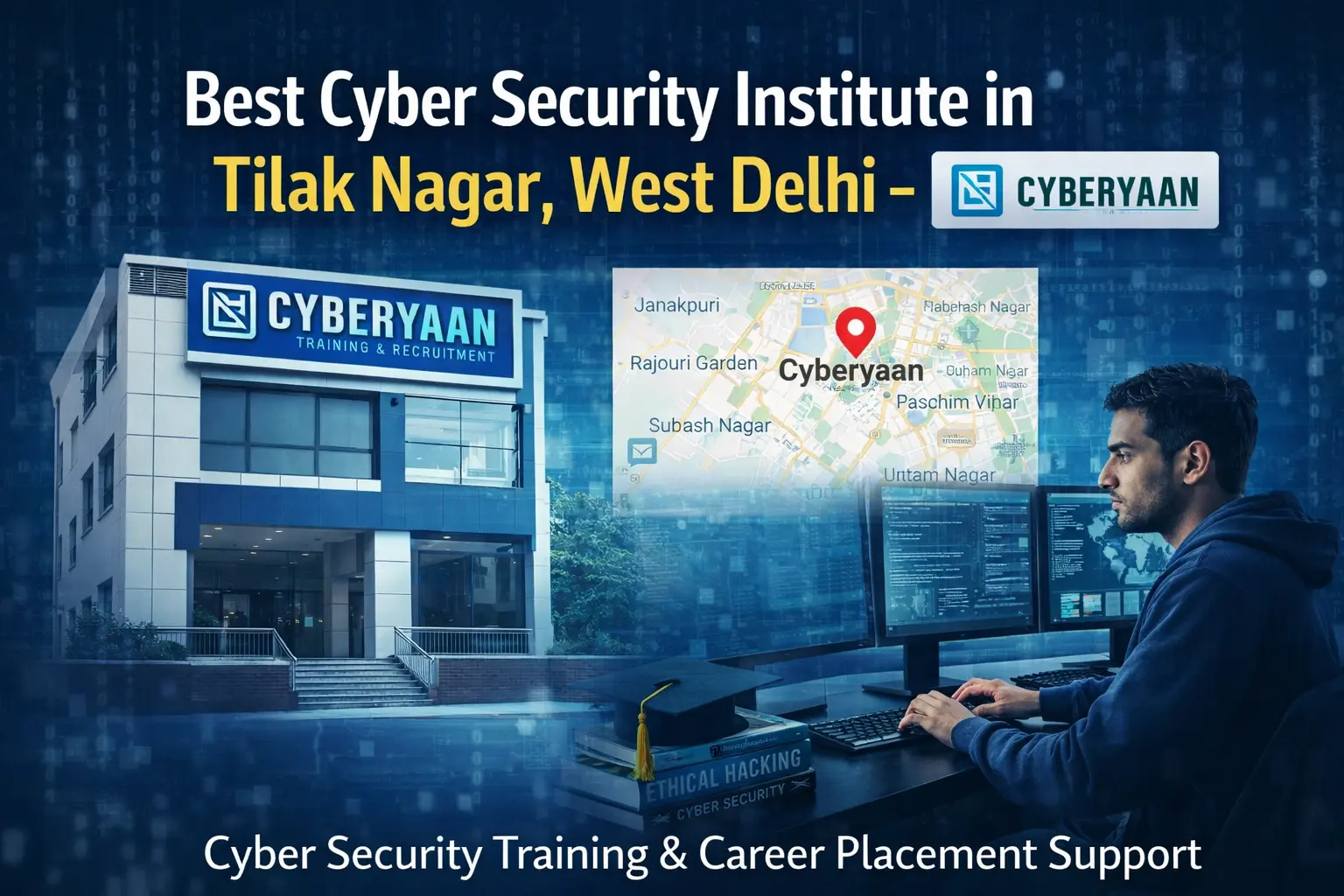
Best Cyber Security Institute in Tilak Nagar, West Delhi - Cyberyaan (2026)
Read More
Best Ethical Hacking Tools Being Used By Professionals And Where to Learn Them (2026)
Read More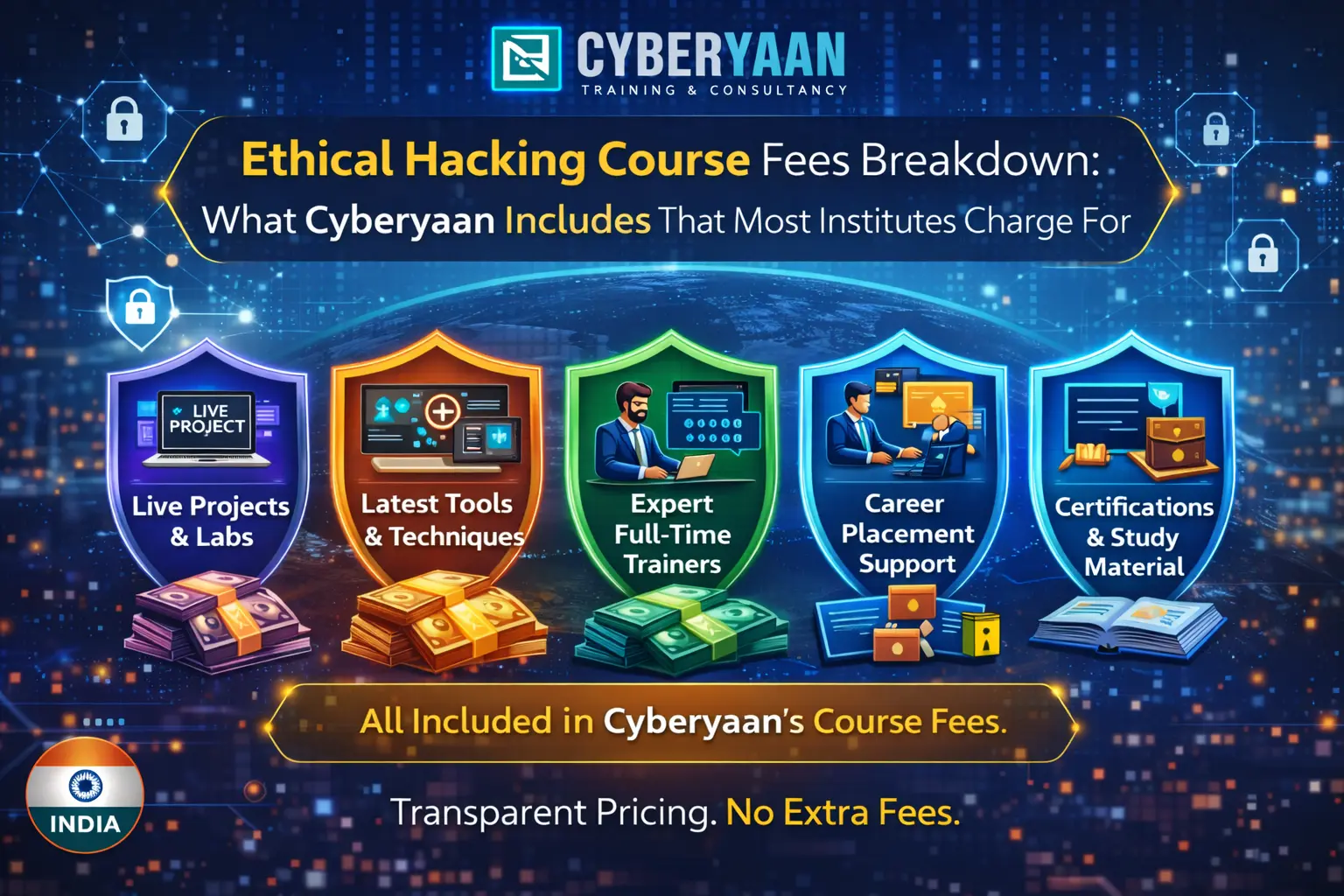
Ethical Hacking Course Fees Breakdown: What Cyberyaan Includes That Most Institutes Charge Extra For (2026)
Read More
Cyber Security Jobs: How to Start a Career From Scratch in 2026
Read More
5 Best Reasons to Study and Pursue a Career in Cybersecurity
Read More
Best Ethical Hacking Training Institute in Delhi, India - CyberYaan (2026)
Read More
SOC Analyst vs Ethical Hacker: Best Cybersecurity Jobs In Delhi (2026)
Read More
How to Become a SOC Analyst in Delhi, India: Best Guide in 2026
Read More
Need 24/7 Protection From Cyber Attacks?
Summer Training Offer
Cyber Security & Ethical Hacking
Batch Starts: 1 June 2026